Best Rooftop Tents for Small Cars: 2026 Comparison
Table of Contents
- Best Rooftop Tents for Small Cars: A Compact Vehicle Buyer's Guide
- Quick Comparison: Three Hard Shell Rooftop Tents for Compact Vehicles
- Rooftop Tent Weight Limit: What Your Small Car's Roof Can Actually Carry
- Rooftop Tent Roof Rack Requirements for Sedans, Hatchbacks, and Small SUVs
- Hard Shell vs Soft Shell Rooftop Tent: Which Fits a Small Car Better?
- Best Rooftop Tent for the Money: Marvelous Sales Picks for Compact Rigs
- Installed Weight, Fuel Economy, and Handling Trade-Offs on Small Cars
- Budget and Ownership Costs Beyond the Tent Price
- Conclusion: Matching a Rooftop Tent to Your Small Car's Real Limits
- Frequently Asked Questions
Last Updated: October 16, 2026
Best Rooftop Tents for Small Cars: A Compact Vehicle Buyer's Guide
Choosing the best rooftop tents for small cars comes down to one number most buyers never check: your vehicle's dynamic roof load rating.
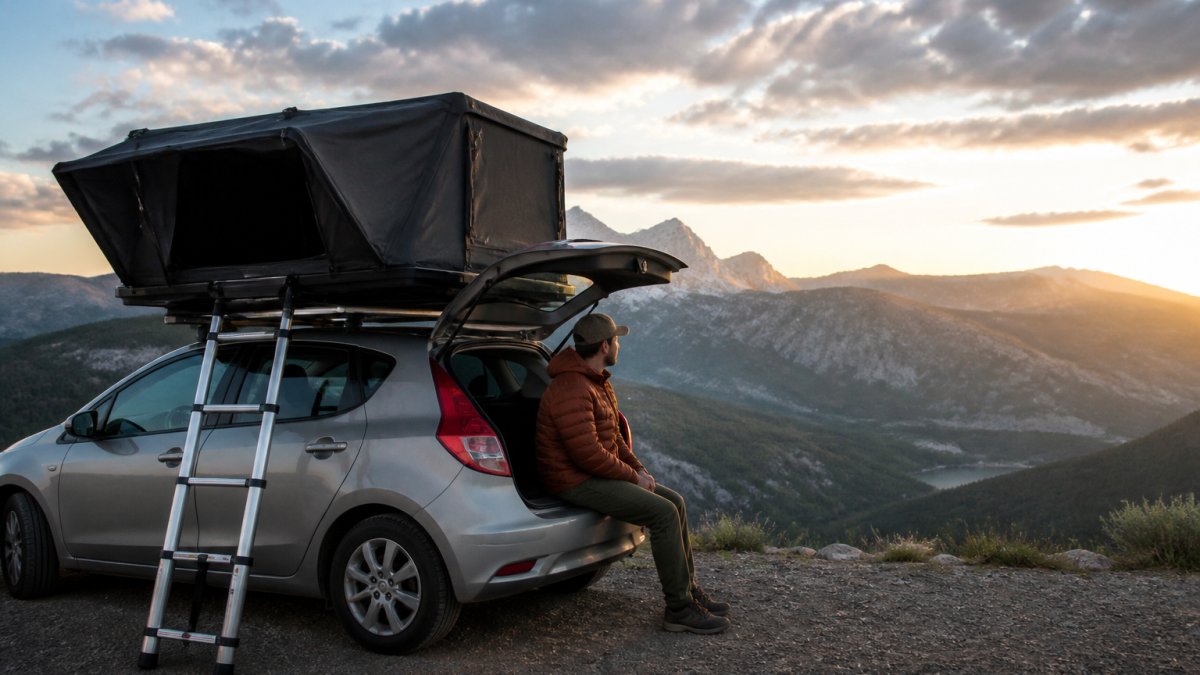
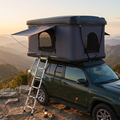
A rooftop tent is a roof-mounted shelter that unfolds or pops up from a hard or soft shell, sleeping two to three people above the vehicle.
Below, we break down weight limits, roof rack requirements, hard shell versus soft shell designs, and three tents from our lineup that fit compact rigs, plus the ownership costs nobody mentions: fuel economy, handling, and parking.
Quick Comparison: Three Hard Shell Rooftop Tents for Compact Vehicles
All three picks are hard shell pop-up designs, because that style suits small vehicles best. Each mounts to a standard crossbar setup and sets up in seconds.
| Tent | Price | Capacity | Weight | Best For |
|---|---|---|---|---|
| Aluminum Shell Tent with Ladder | $1,239.99 | 2-3 people | 163.35 lbs | Best overall value |
| Square ABS Shell Tent | $1,689.99 | 2 adults + 1 child | 146.6 lbs | Families wanting space |
| Asymmetrical 4-Season Tent | $1,549.99 | 2 people | 154.5 lbs | Year-round camping |
The rest of this guide explains why weight and rack ratings matter more than any feature list.

Rooftop Tent Weight Limit: What Your Small Car's Roof Can Actually Carry
Here is the arithmetic that matters. Suppose your owner's manual lists a 132-pound dynamic roof load limit. Your crossbars weigh 12 pounds and your tent weighs 146.6 pounds.
- Dynamic load rating: the limit while the vehicle is moving. This is the one that governs fitment, and it is the number to find first.
- Static load rating: the limit while parked. Usually far higher, often 3 to 5 times the dynamic figure, because the tent and occupants rest on it at camp rather than bouncing at highway speed.
- Total installed weight: tent plus crossbars plus mounting hardware. Always add these together, then compare to the dynamic rating.
- Occupant load at camp: two adults plus bedding can add 350 to 450 pounds to the static side. Confirm the static rating covers tent, occupants, and gear combined.
A common pattern among small-car owners is to check only the tent's shipping weight.
If your car's dynamic rating is lower than the combined weight, you have three options: choose a lighter tent, upgrade to a rack rated for the load (which raises the bar limit but not the roof limit), or skip the roof entirely. The roof limit is fixed by the vehicle; the rack limit is not.
NHTSA vehicle safety and load information
Before you order, find the roof load figure in your owner's manual, add up tent plus rack plus hardware, and compare the two numbers.
Rooftop Tent Roof Rack Requirements for Sedans, Hatchbacks, and Small SUVs
Rooftop tent roof rack requirements come down to three things: crossbar spread, bar weight rating, and mounting compatibility.
Crossbar spread. Most hard shell tents need a minimum spread of roughly 30 to 32 inches between bars to sit stable and distribute load.

Bar weight rating. Each crossbar pair carries its own limit, separate from the roof limit. The lower of the two governs.
Mounting hardware. Confirm the tent's brackets fit your bar profile. Round, square, and aero bars each need different clamps, and the wrong clamp is a fitment failure.
Fitment by body style
- Sedans: Factory rails are rare. You will almost always need an aftermarket system such as a Thule or Yakima foot-pack and bar kit, or a clamp-on system that grips the door frame. Clamp-on systems have their own load limits and often sit below the roof's dynamic rating.
- Hatchbacks: Similar to sedans, but the short roof can limit crossbar spread. Some cannot reach the 30-inch minimum without a custom bar position.
- Station wagons: Often ship with factory rails, which simplifies the install and usually allows a wider spread. Confirm the factory rail's own load rating, which is sometimes lower than the roof's.
- Compact SUVs: The easiest fitment class. Factory rails or fixed mounting points are common, spreads are generous, and aftermarket support is broad. This is where most first-time small-car buyers should start.
A common pattern is to buy the tent first and discover the rack does not exist for your car. Reverse the order: confirm a rack solution exists for your year, make, and model, then buy the tent.
FMVSS cargo and roof load guidance
Once you have a rack that fits and a spread that clears the minimum, the remaining question is whether the combined weight stays under your dynamic roof rating, the check most buyers skip.
Hard Shell vs Soft Shell Rooftop Tent: Which Fits a Small Car Better?
For small cars, a hard shell rooftop tent wins on weight distribution, aerodynamics, and setup speed. Soft shell tents fold out longer and often weigh more, working against a compact vehicle's roof limits.
The trade-off is interior volume: soft shell designs offer more floor space when deployed, since they unfold across a larger footprint.
- Hard shell: lower profile, faster setup, better fuel economy, higher price.
- Soft shell: more sleeping space, lower entry price, longer packed footprint and slower setup.
Our three picks are all hard shell for a reason: on a small car, a soft shell's aerodynamic penalty shows up at the pump, and its packed length can overhang the roof.
Best Rooftop Tent for the Money: Marvelous Sales Picks for Compact Rigs
The best rooftop tent for the money depends on how many people you sleep and how much roof capacity you have. Here are our three picks, ranked by value for compact vehicles.
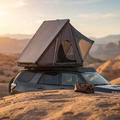
1. Roof Top Tent Hardshell Rooftop Tent for Van SUV Truck Car Overland Tent Camping for 2-3 Person with Ladder
Our top pick for most small-car owners. At $1,239.99, it is the lowest-priced hard shell in our lineup and the easiest to justify for a first overlanding setup.
The 100% aluminum alloy shell and 300D high-density Oxford fabric give it a sturdy structure, and the air pressure rods open and store the tent in roughly three seconds.
Roof Top Tent Hardshell Rooftop Tent for Van SUV Truck Car Overland Tent →
Where it falls short: at 163.35 pounds, it is the heaviest of the three. Check your dynamic roof rating carefully before committing.
2. Hard Shell Rooftop Tent Pop-Up Tents 2-3 Person for SUV Caravan Campervan
The best value for year-round campers. At $1,549.99, this asymmetrical tent is rated for four-season use, which matters if you camp outside summer.
The 420D Oxford cloth with PU coating handles varied weather, and the compact footprint fits rooftop mounting setups while maximizing usable space. It sleeps two people and weighs 154.5 pounds, lighter than our top pick.
The catch: one door instead of two, and a two-person capacity that leaves no room for a third sleeper.
3. Roof Top Tent Hard Shell Camping Pop-Up Tents for SUV Campervan Fit 2-3 Person
The pick for families who need space. At $1,689.99, it is the priciest option, but it is also the lightest at 146.6 pounds and the roomiest.
The stainless steel frame and ABS shell provide strength, and the square shape sleeps two adults plus one child.
Where it falls short: the square profile creates more wind resistance than the asymmetrical design, and the higher price is hard to justify for solo campers.
Installed Weight, Fuel Economy, and Handling Trade-Offs on Small Cars
Total installed weight, not tent weight alone, changes how your car drives. Add the tent, crossbars, and hardware, then think about what that mass does at highway speed.
A rooftop tent raises your center of gravity, which shows up as more body roll in corners and longer braking distances.
Parking is the other daily annoyance. Even packed, a rooftop tent can push a compact car past the clearance of older garages and drive-throughs. Measure your packed height before you commit.
- Handling: slower cornering response, more sway in crosswinds.
- Fuel economy: worse at highway speed, less noticeable in city driving.
- Parking: check garage and carport clearance with the tent packed.
Budget and Ownership Costs Beyond the Tent Price
The tent is the biggest line item, but not the only one. A complete small-car setup includes crossbars, mounting hardware, and often off-season storage.
Crossbars for a sedan or hatchback typically run a few hundred dollars installed.
Then there is fuel cost. A rooftop tent on a small car adds drag every mile, camping or commuting. Owners who leave it mounted year-round pay at every fill-up.
Our advice: mount the tent for trips, remove it for daily driving, and store it properly. It protects the tent, your fuel budget, and your roof.
Conclusion: Matching a Rooftop Tent to Your Small Car's Real Limits
The hard part of buying a rooftop tent for a small car is not picking a model. It is confirming your vehicle can carry it safely, and that takes ten minutes with your owner's manual.
At Marvelous Sales, we built our rooftop tent lineup around that reality: hard shell designs that keep weight and packed size down, with fast pop-up setup so you spend less time building camp.
Explore the Gear and match a tent to your vehicle's real limits, not its marketing spec sheet.
Frequently Asked Questions
Can a small car support a rooftop tent?
It depends on your vehicle's dynamic roof load rating, which is the weight the roof can carry while driving. Most small cars and compact SUVs are rated between 100 and 165 pounds dynamic. A hard shell rooftop tent like the 146.6 lb option from Marvelous Sales sits right at the edge of that range, so you must check your owner's manual before mounting anything. If the tent plus crossbars exceeds your dynamic limit, the roof or mounting points can fail while you are moving.
Do I need special roof racks for a rooftop tent?
Yes. Rooftop tent roof rack requirements are stricter than for a bike or cargo box. You need crossbars rated for the tent's full static weight, plus a dynamic rating that covers the tent while driving. Most rooftop tents mount to two crossbars spaced 28 to 36 inches apart. Factory racks on small cars often have lower limits than aftermarket options, so check the bar rating stamped on the crossbar or listed in the rack manual before you buy.
How much does a rooftop tent weigh?
Hard shell rooftop tents typically run 140 to 165 pounds for a two to three person model. The Marvelous Sales hardshell tent weighs 163.35 lbs, the square pop-up model weighs 146.6 lbs, and the asymmetrical 420D Oxford model weighs 154.5 lbs. Soft shell tents can hit 200 lbs or more because of the folding base and fabric. On a small car, that weight eats into your remaining payload, so factor in passengers and gear too.
Is a rooftop tent worth it for a small car?
It can be, if you pick a model that stays within your roof's dynamic load rating and you accept the trade-offs. You get fast setup, an elevated sleeping platform that avoids wet ground, and a camp that packs down in minutes. The drawbacks on a small car are lower fuel economy from added drag, higher center of gravity, and tighter parking clearance. Weigh those against the convenience and decide based on how often you camp.
What is the most compact rooftop tent?
Look for an asymmetrical or low-profile hard shell design. The Hard Shell Rooftop Tent Pop-Up Tents 2-3 Person for SUV Caravan Campervan from Marvelous Sales has an asymmetrical shape and a compact footprint at 8.63 ft long and 4.79 ft wide, which leaves more of the roof open for other gear. Hard shells generally pack flatter than soft shells, so they are the better pick when roof real estate is tight.