Electric Dirt Bike Trail Safety Tips: 7 Rules to Ride
Table of Contents
- Start With the Right Electric Dirt Bike Trail Safety Gear
- Run an Electric Dirt Bike Pre-Ride Inspection Every Time
- Electric Dirt Bike Battery Safety on the Trail
- Electric Dirt Bike Trail Riding for Beginners: Build Skills First
- Check Trail Legality, Access, and Local Rules Before You Ride
- Group Riding, Emergency Planning, and Changing Trail Conditions
- Frequently Asked Questions
Last Updated: October 18, 2026
Start With the Right Electric Dirt Bike Trail Safety Gear
Most trail injuries start with borrowed gear and a rushed launch. Good electric dirt bike trail safety begins before the motor turns on, with what you wear.

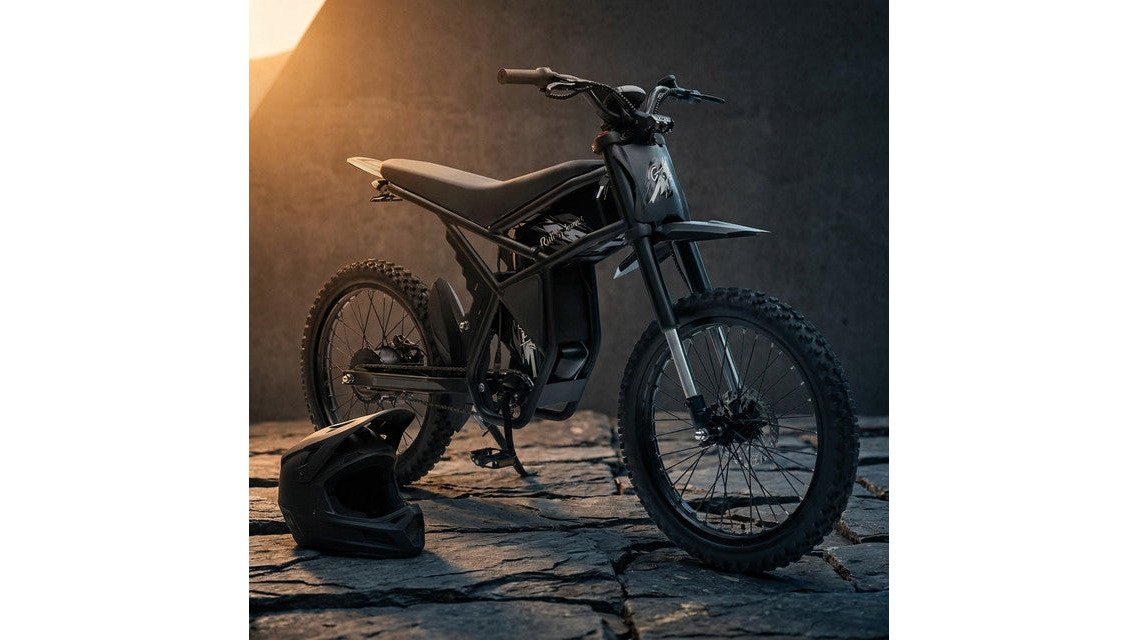
Helmets are non-negotiable. A full-face helmet protects your jaw and face in a forward fall, the most common crash direction on a dirt bike.
Gloves matter more than beginners expect. Look for reinforced palms and knuckle protection, since your hands hit the ground first when you dismount fast.
Boots and knee protection finish the kit:
- Over-ankle boots with a stiff sole and ankle support
- Knee guards or knee braces that stay put when you stand on the pegs
- Durable clothing: long sleeves, long pants, no loose cuffs near the chain
Helmet, Goggles, and Gloves
Fit beats price. A loose helmet slides in a crash, and foggy goggles get pushed onto your forehead, leaving your eyes exposed.
Check three things before you buy:
- The helmet sits snug with no forward roll
- Goggles fit the helmet opening without gaps
- Gloves let you work the brake levers without pinching
Boots, Knee Protection, and Durable Clothing
Your feet and knees take the beating on rough ground. Over-ankle footwear keeps pegs and rocks off your ankle bones.
A common mistake is riding in sneakers "just for a quick loop." Trail surfaces change fast, and a low-speed tip-over can still pin your foot under the bike.
Run an Electric Dirt Bike Pre-Ride Inspection Every Time
An electric dirt bike pre-ride inspection takes about five minutes and catches the failures that strand riders far from the trailhead. Do it every ride.
Work through the same order each time so nothing gets skipped:
- Tires: pressure, tread, and visible damage
- Brakes: lever feel, pad wear, and a slow-speed test
- Chain: tension and lubrication
- Battery: charge level and mounting security
- Controls: throttle response, lights, and display
Tires, Brakes, and Chain Tension
Tire pressure changes how the bike grips. Fat tires like the GT73's run at lower PSI than standard dirt bike tires, so check the manufacturer's spec with a real gauge, not a thumb press.
Squeeze each brake lever and feel for a firm, consistent pull. If a lever travels to the bar, fix it before you ride.
Chain tension sits in a narrow window. Too tight wears the drivetrain; too loose can throw the chain. Spin the rear wheel and watch the chain as it moves.
Electric Dirt Bike Battery Safety on the Trail
Battery care is where electric dirt bikes differ most from gas bikes. A pack that's fine at the trailhead can fade fast on a long climb, and a damaged pack can turn a tip-over into a fire risk.
Plan your charge around the ride. Know your realistic range, then cut it by a third for cold weather, steep grades, and soft ground.
Electric-Specific Hazards to Check Before and During the Ride
Electric dirt bikes have failure modes gas bikes don't. Run these checks every ride:
- Throttle behavior: With the bike on a stand or held stationary, confirm the throttle returns to zero on its own and the motor cuts when you release it. A sticky or slow-returning throttle is a stop-ride condition.
- Power modes: Know which mode you're in before you roll. A low-traction or eco mode softens the initial torque hit; a sport mode delivers full current instantly. Match the mode to the terrain, not your mood.
- Unintended acceleration prevention: Never power on the bike while your hand is on the throttle, and never let a bystander twist the grip while the bike is live. Many models require a key, app, or kill switch sequence, use it every time you stop.
Safe Shutdown After a Crash
If you go down, shut the bike down before anything else, even before checking yourself over, if you're able:
- Hit the kill switch or remove the key.
- If the bike is on its side, do not twist the throttle to "test" it; right the bike first, then power on.
- Inspect the battery case, wiring, and connectors for crush damage, exposed cells, or melted insulation.
- If you smell burning or see smoke, move away and keep others back; a lithium pack fire is not a garden-hose problem.
- Do not ride a bike with a damaged pack or compromised wiring, push or tow it out.
Charging and Storage Care
Basic battery care on the trail and at home:
- Start with a full charge and check the level before you leave
- Keep the battery out of direct sun when you stop
- Avoid water crossings deeper than the bike is rated for
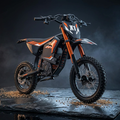
The GT73 uses dual removable 48V lithium batteries, which lets you swap packs between rides instead of waiting on a charger. That's a real advantage on multi-day trips, but swap only cool, undamaged packs, and carry them protected from impact.
Electric Dirt Bike Trail Riding for Beginners: Build Skills First
Electric dirt bike trail riding for beginners should start slow, on easy ground, with skills built in order. The motor's instant torque is the trap: it responds faster than a gas engine, so a nervous twist delivers more than you expect.
Electric Dirt Bike – GT73 High-Performance Off-Road Bike for Adventure Seekers →
Start on flat, open ground. Practice starting, stopping, and turning before you touch a real trail.
Posture, Balance, and Throttle Control
Stand on the pegs with knees bent and elbows up, so the bike moves under you instead of throwing you around.
Throttle control is the skill that separates smooth riders from sketched ones. Roll it on gradually. On an electric bike, small inputs go a long way.
Practice these drills:
- Figure-eights at walking pace
- Controlled stops from a set speed
- Slow-speed turns with your weight on the outside peg
Check Trail Legality, Access, and Local Rules Before You Ride
Trail legality is the step riders skip, and it's the one that closes riding areas for everyone. Electric dirt bikes aren't welcome everywhere mountain bikes are, and rules vary by land manager.
Before you load up, confirm:
- Whether the trail allows motorized vehicles
- Whether electric bikes count as motorized under local rules
- Whether a permit, sticker, or pass is required
Check the official site for the land agency or park that manages the trail. Rules for motorized vehicle use on public lands and state park systems change, and a trail that was open last season may be closed now.
Ride only on designated riding areas. Cutting new lines damages terrain and gives opponents of trail access their best argument.
Group Riding, Emergency Planning, and Changing Trail Conditions
Group riding needs a plan before the first bike moves. Agree on a lead rider, a sweep rider, and a regroup point. The lead sets pace and calls obstacles; the sweep stays behind the slowest rider and carries spare parts and the first-aid kit.
Spacing, Passing, and Hand Signals
- Spacing: Leave at least two to three bike lengths on open trail and more in dust or on descents. On blind corners, assume someone is coming the other way.
- Passing: Pass only where the rider ahead can see you and has room to yield. Call out "passing on your left" and wait for acknowledgment.
- Hand signals: A raised fist means stop; a downward palm pat means slow down; pointing at the ground flags a hazard; a tap on the helmet means rider down. Agree on these at the trailhead so nobody has to shout over motors.
Emergency Planning and Incident Response
Emergency planning starts with the boring stuff, and it matters most:
- Share your route, vehicle location, and expected return time with someone at home before you leave
- Carry a basic first aid kit, a way to call for help (cell service is unreliable on trails, a satellite messenger is worth the weight), and water
- Know the nearest trailhead access point for a vehicle and how to describe your location to responders
If a rider is injured:
- Secure the scene, kill switches off, bikes off the trail, one person directing traffic.
- Don't move an injured rider unless there's immediate danger; check responsiveness and breathing.
- Control bleeding with direct pressure and the first-aid kit.
- Send two riders for help with a written note of the location, injury, and time; keep one rider with the injured person.
- If a bike is disabled, tow or push it off the trail so it doesn't block other riders, and mark the spot.
Weather, Visibility, and Changing Trail Conditions
Weather and visibility change the ride, and the right call is sometimes to turn around:
- Rain and wet clay: Hardpack turns slick and braking distances stretch. Slow down, brake earlier and smoother, and avoid wet roots and rocks, which are far slicker than they look.
- Loose gravel and dust: Reduce speed, increase following distance, and stay out of the dust cloud of the rider ahead.
- Heat: Ride early, carry more water than you think you need, and watch for heat exhaustion, confusion and cramping are stop-ride signs.
Simple go/no-go rule: if conditions have changed enough that you'd ride more cautiously than your skill level supports, turn back. The trail will be there next weekend.
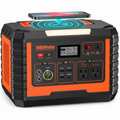
We stock gear at Marvelous Sales for exactly these trips, from portable power for charging between rides to the bikes themselves. Our Electric Dirt Bike - GT73 pairs dual batteries with fat 26" x 3" tires and dual hydraulic disc brakes, built for range and control on mixed terrain.
For teens and adults stepping up, the 4500W Peak Ebike carries full suspension and a UL2849 compliance rating, a detail worth checking on any e-bike you buy.

| Rule | What to Check | When |
|---|---|---|
| Gear | Helmet, goggles, gloves, boots, knee guards | Before every ride |
| Pre-ride inspection | Tires, brakes, chain, battery, controls | Before every ride |
| Battery care | Charge level, heat, damage signs, kill switch | Start and end of ride |
| Skills | Posture, throttle, braking drills | First several rides |
| Legality | Motorized access, permits, closures | Before each new trail |
| Group plan | Lead, sweep, regroup point, signals, emergency contact | Before the group rolls |
Frequently Asked Questions
Can you ride an electric dirt bike on a bike trail?
It depends on the trail. Many multi-use trails restrict motorized vehicles, and an electric dirt bike with a throttle is usually treated as motorized even when it is quiet. Check the land manager's rules before you ride: federal lands, state forests, and county parks each set their own access policies. Look for posted signs at the trailhead, confirm whether e-bikes are allowed, and stick to designated riding areas. Riding closed trails risks fines and can get access shut down for everyone.
What safety gear should you wear on an electric dirt bike?
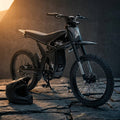
At minimum: a DOT-rated full-face helmet, goggles, gloves with reinforced palms and knuckle protection, over-ankle boots, knee protection, and durable clothing that covers your arms and legs. The GT73 tops out around 30 MPH and the X1 Spark reaches 50 MPH, so treat gear as non-negotiable at either speed. A chest protector and elbow pads add useful coverage for rocky terrain. Replace any helmet that takes a hard impact, even if it looks fine.
How should beginners prepare for an electric dirt bike trail ride?
Start on flat, open ground before you touch a real trail. Practice throttle control, gradual braking, and dismounting until they feel automatic. Then pick an easy, legal trail and ride it at low power mode. Beginners should ride with someone experienced, carry a charged phone, and tell a contact where they are going. The first ride is about learning the bike's response, not covering distance, so keep sessions short and build up gradually.
How do you check an electric dirt bike before riding?
Run a quick pre-ride inspection every time: check tire pressure and tread, test both brake levers, look at chain tension, confirm the battery is charged and securely seated, and test the throttle and lights. On the GT73, verify both removable 48V batteries are locked in. On the X1 Spark, check the 60V pack and hydraulic brakes. A two-minute check catches most trail failures before they strand you miles from the trailhead.
Trail safety comes down to preparation you repeat until it's automatic. Marvelous Sales carries electric dirt bikes built for real trail use, with dual battery systems, hydraulic brakes, and full suspension, plus a hassle-free 30-day return window if the fit isn't right. Explore the gear and start your next ride with equipment you can trust.