7 Portable Power Station Maintenance Habits That Extend Battery Life
Last Updated: November 15, 2026
Quick Summary
Portable power station maintenance comes down to controlling charge level: store the unit at about half charge in a cool, dry spot with all outputs off, and top it up every two to three months. Monthly, wipe the vents and housing, inspect cables, and confirm every output is switched off.
- Never leave a unit sitting at zero charge after a trip.
- Charge in one steady session and unplug once the unit is full.
- Never charge a frozen battery; let it warm to room temperature first.
- A charge cycle is one full equivalent of discharge and recharge.
- Stop using the unit if you see swelling, unusual heat, or a burning smell.
Table of Contents
- Why Portable Power Station Maintenance Decides Battery Life
- How to Store a Portable Power Station Between Trips
- Portable Power Station Charging Best Practices
- Monthly Checks: Cleaning, Inspection, and Output Shutdown
- Portable Power Station Maintenance in Winter
- What to Expect From Portable Power Station Lifespan
- Warning Signs, Troubleshooting, and Chemistry-Specific Care
- Pick a Power Station Built to Handle the Maintenance
- Frequently Asked Questions
Why Portable Power Station Maintenance Decides Battery Life
Learning how to maintain portable power stations comes down to one habit: control the charge level. A lithium battery that sits at the right state of charge, in a cool dry spot, with clean vents, will outlast one that is stored full and forgotten. This guide covers the routine that keeps a unit ready for years.
Most owners treat a power station like a cooler. Charge it, use it, park it in the garage. That works until the next trip, when the unit wakes up sluggish or refuses to charge at all.
Lithium cells age fastest at two extremes: sitting at 100% charge and sitting bone dry. Heat speeds both up. The U.S. Department of Energy guidance on lithium battery storage makes the same point, which is why a little routine beats a big repair bill.
Below, we'll show you exactly how to store, charge, and check a unit so its battery lifespan stretches as far as it can.
How to Store a Portable Power Station Between Trips
Store a portable power station in a cool dry room with every output switched off, and check the manual for the recommended storage charge level.
The Right Charge Level for Long-Term Storage
A battery held at full charge for months loses capacity faster, and one drained flat can fall asleep and refuse to wake.
A common mistake is topping the unit off before storage. It feels responsible. It is not.
- Aim for half charge before any storage longer than a few weeks
- Top up to that level every two to three months
- Never leave a unit sitting at zero after a trip
Temperature, Humidity, and Where the Unit Should Sit
Pick a spot that stays cool, dry, and out of direct sun. A closet shelf or a garage cabinet works. A metal shelf in a hot shed does not.
Humidity matters as much as heat. Moisture creeps into ports and connectors, and water damage is not something you can undo. Keep the unit off the floor and away from damp concrete.
- Ideal range: a stable, room-temperature spot
- Avoid: car trunks, sun-facing windows, unheated sheds
- Check the manual first; model-specific limits vary
Portable Power Station Charging Best Practices
Charge in one steady session and unplug once the unit is full. Partial top-ups are fine for daily use, but long sessions at 100% are what wear a battery down. Charging best practices come down to timing, not force.
Watch out: charging a cold unit straight from a freezing truck bed can stress the cells. Let it reach room temperature first.
Monthly Checks: Cleaning, Inspection, and Output Shutdown
Once a month, spend ten minutes on three tasks: wipe the unit down, inspect the cables, and confirm every output is off. This is the whole portable power station maintenance routine in miniature.
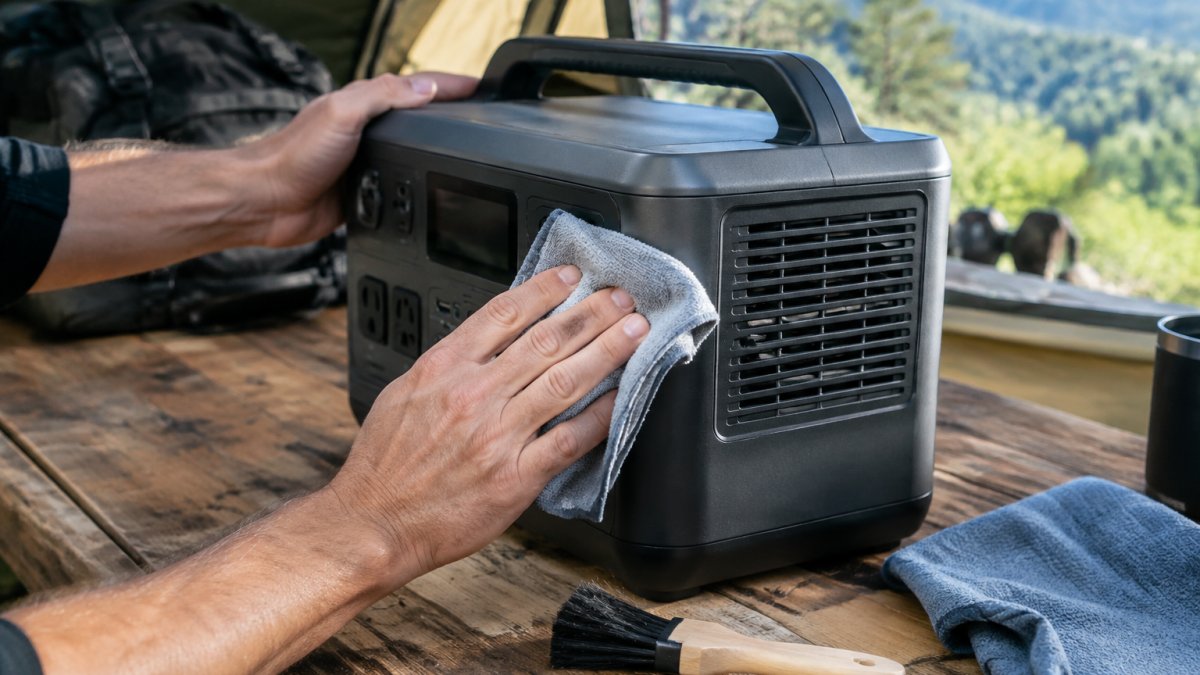
Start with the vents. Dust blocks airflow, and trapped heat is the enemy of battery health. A soft brush and a dry cloth handle it. Never spray cleaner into the housing.
Then check the cables and connectors for fraying, bent pins, or corrosion. A damaged cable can overheat during charging.
- Wipe the housing and vents with a dry cloth
- Clear dust and debris from ports
- Inspect cables and connectors for wear
- Switch off all outputs when the unit is idle
- Confirm the charge level is still near half
Portable Power Station Maintenance in Winter
Winter asks for three changes: warmer storage, gentler charging, and a post-use warm-up routine. Cold slows the chemistry inside a lithium battery, so a unit that lives in a freezing garage all season will underperform and age faster.
Why Cold Is Hard on Lithium Cells
Lithium-ion cells move ions through an electrolyte, and that process slows as temperature drops. Charging a cold cell forces lithium onto the anode faster than it can be absorbed, which can plate metallic lithium and permanently cut capacity. Discharging in the cold is less damaging but still reduces usable runtime, which is why a unit that reads empty at 20°F may simply be cold, not dead.
Most manufacturers publish an operating range and a separate charging range in the manual. A common pattern is discharging down to roughly 14°F and charging only above freezing, but the exact limits vary by model and chemistry. Check the manual before trusting any generic number, including the ones in this section.
Storage Temperature and Placement
Bring the unit indoors for long storage. A stable room-temperature spot is ideal. If it must stay in an unheated space, insulate it from the concrete floor with a board or shelf and check it more often, because a cold unit also self-discharges and can drift below the safe storage charge.
- Target a stable spot above freezing for long storage
- Keep the unit off cold concrete and away from drafty doors
- Recheck the charge level monthly instead of every two to three months
- Never store a unit at zero charge, cold or warm
Charging and Post-Use Warm-Up
Never charge a frozen battery. Let it warm to room temperature first, which can take several hours for a large unit. The same rule applies after a cold night of camping.
After any cold-weather use, run this checklist before the unit goes back into storage:
- Let the unit sit indoors until it reaches room temperature.
- Wipe off condensation from the housing, ports, and handle before it can seep in.
- Inspect cables and connectors for stiffness or cracks that cold can cause.
- Recharge to roughly half charge, not full, if the unit is going back into storage.
- Confirm every output is switched off.
Watch out: charging a cold unit straight from a freezing truck bed can stress the cells and trigger a charge fault, so warm it first even when you are in a hurry.
What to Expect From Portable Power Station Lifespan
Most portable power station batteries are rated for a set number of charge cycles, and capacity fades gradually as those cycles add up. Expect a noticeable drop over years of regular use, not months. The routine above is what keeps that fade slow.
Cycle Counts and Chemistry
A charge cycle is one full equivalent of discharge and recharge, so two half-discharges count as one cycle. Chemistry sets the ceiling. LiFePO4 packs are commonly rated for several thousand cycles and handle deep cycling and long storage better than older lithium-ion packs, which often carry lower cycle ratings and prefer staying topped up. The manual states the rating for your model; treat any generic number as a starting point, not a promise.
How to Measure Battery Health Over Time
You cannot see capacity fade directly, so track it. Pick a repeatable test and run it every few months:
- Note the cycle count if the unit displays one.
- Run a known load, such as a lamp or small fridge, from full to empty and record the runtime.
- Compare that runtime to the rated watt-hour capacity and to your last test.
- Log the date, load, and runtime so the trend is visible.
A slow, steady decline across tests is normal degradation. A sudden drop, a unit that shuts off early, or a runtime far below the rating points to a fault, not age.
Normal Degradation vs. a Fault
Normal fade is gradual and predictable. A fault is sudden. Stop using the unit and follow the manual if you see swelling, unusual heat, an error code, a burning smell, or a charge level that jumps erratically. Capacity loss that appears after a deep discharge or a cold snap is often recoverable with a slow warm recharge; capacity loss that appears with swelling is not.
Chemistry matters here.
Warning Signs, Troubleshooting, and Chemistry-Specific Care
| Warning Sign | Likely Cause | What to Do |
|---|---|---|
| Won't hold charge | Deep discharge or cold | Warm it, then charge slowly |
| Runs hot while charging | Blocked vents or bad cable | Clean vents, swap the cable |
| Swollen housing | Cell damage | Stop using it; follow the manual |
| Ports feel loose | Worn connector | Replace the cable, not the unit |
Always check the manual first; model-specific advice beats generic advice.
Pick a Power Station Built to Handle the Maintenance
For a home backup or big camp setup, the 1000W Continuous Portable Power Station delivers 1000W of continuous output with quiet operation. For solar-ready trips, the Portable Power Station with Solar Panels and LiFePO4 battery includes panels and a built-in LED light. Smaller trips suit the compact 300W LiFePO4 solar generator.
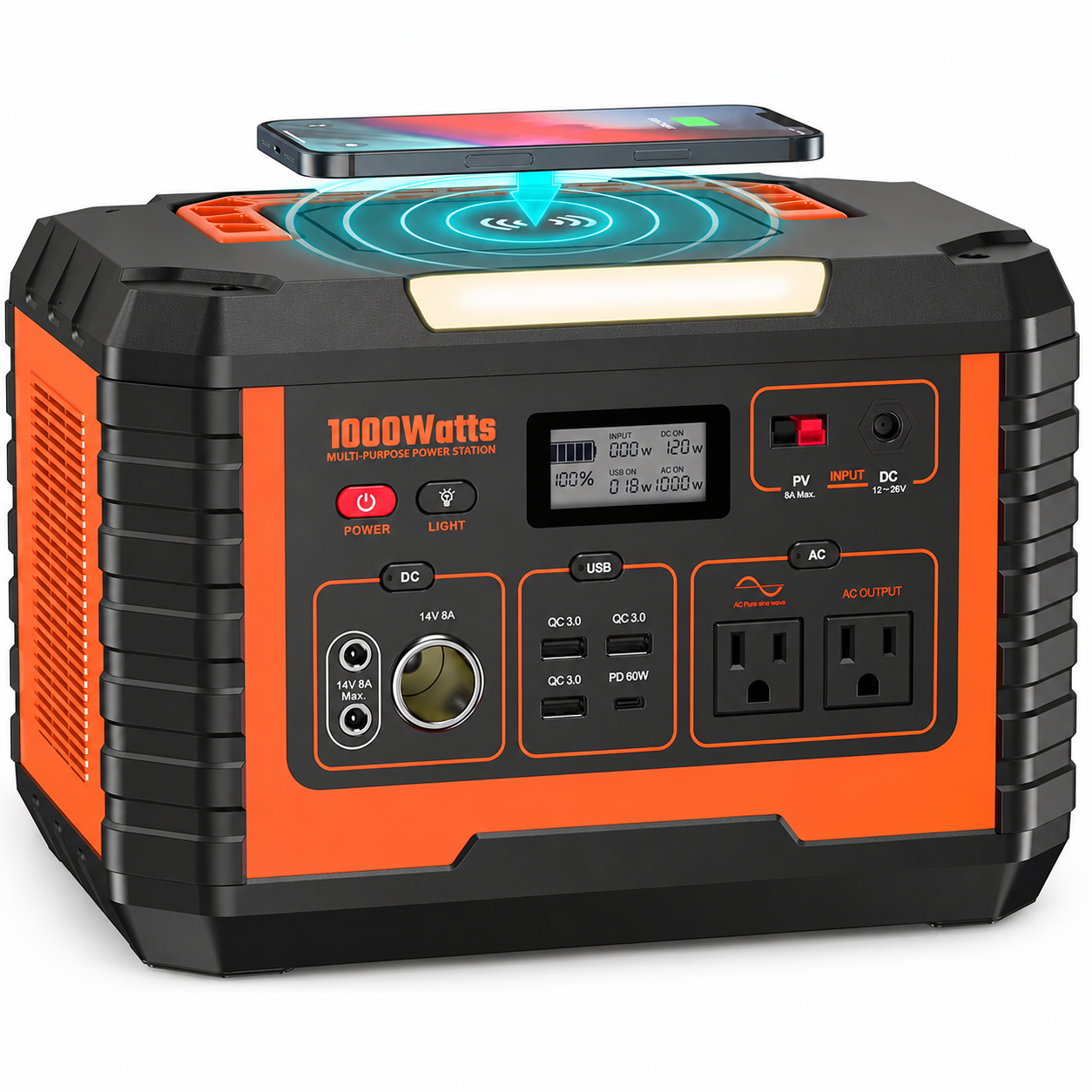
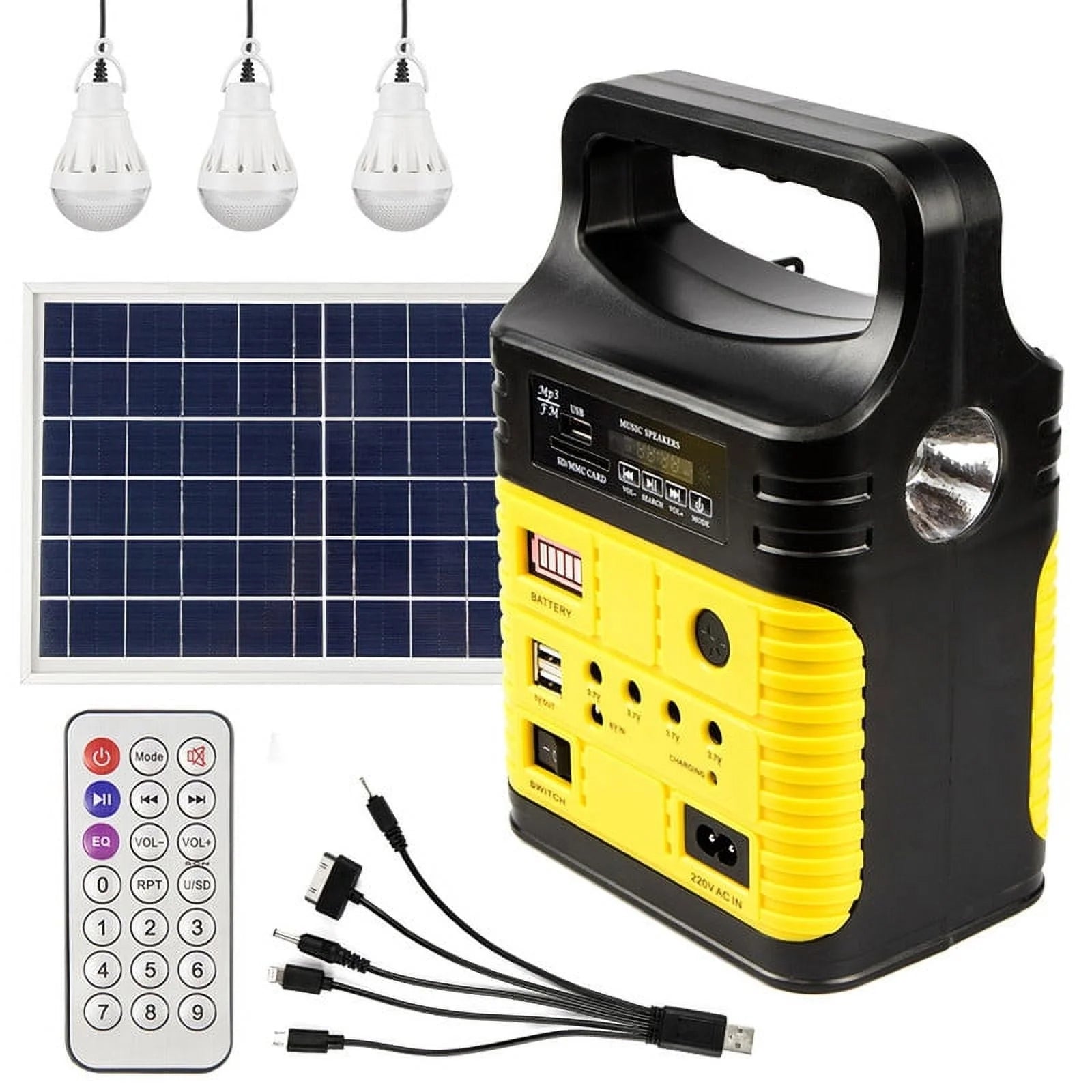
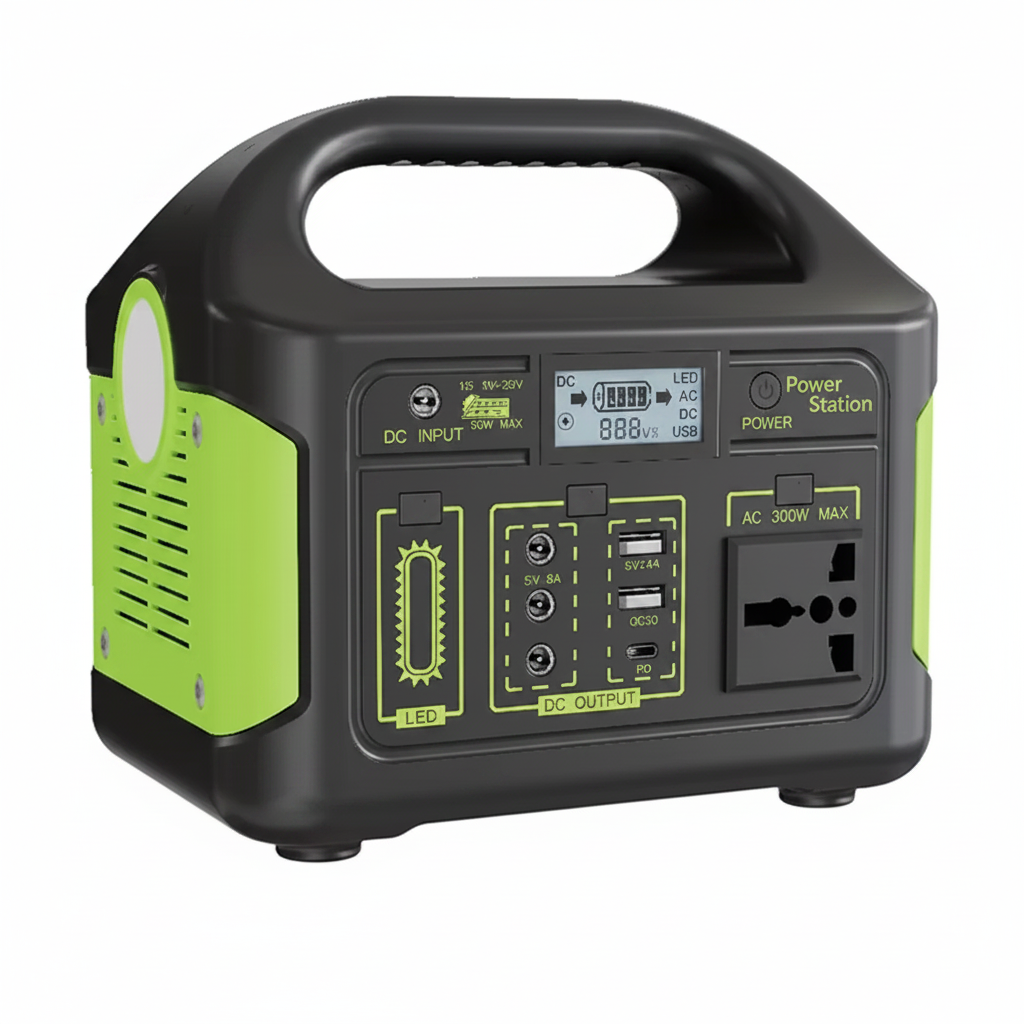
Free shipping is available on most orders within the Continental U.S., and returns are accepted within 30 days.
A power station that dies mid-trip is a bad surprise. The habits above make it unlikely. Marvelous Sales carries portable power stations built for real-world use, with LiFePO4 options, solar-ready kits, and gear selected for durability. Get started with Marvelous Sales and keep your power ready for the next trip.
Frequently Asked Questions
Can I leave my portable power station plugged in all the time?
Not for long stretches. Leaving a unit on the charger keeps it at 100% state of charge, and lithium-ion and LiFePO4 batteries age faster when held at full capacity in warm conditions. Charge to full before a trip, then unplug and drop to around 50% for storage. If your station is your home backup and must stay ready, check the manual for a pass-through or UPS mode and keep it in a cool room.
How often should I recharge a stored portable power station?
Check the charge level periodically and top it back up when it is low. Check the manual for your model's storage guidance. Set a phone reminder for the first of each month so periodic charging becomes automatic rather than something you remember after a dead station.
What is the lifespan of a portable power station?
Cycle ratings and expected lifespan vary by battery chemistry and model, so check the manual for your unit's rating. Capacity degradation is gradual, so watch runtime on a known load, such as a 1000W Continuous Portable Power Station running a cooler, to judge real battery health.
How should you store a portable power station in winter?
Keep it indoors in a cool, dry room, and check the manual for your model's temperature limits. Bring the unit to room temperature before recharging, and check the charge level monthly through the winter months.