Why High Quality Tents Cost More Than Cheap Ones
Last Updated: November 21, 2026
Quick Summary
High quality tents cost more because stronger fabric, heavier coatings, sealed seams, tested aluminum poles, and the labor to assemble them correctly all carry real manufacturing expense. Cheap tents cut cost where you can't see it until the storm arrives, while premium materials and construction let a tent perform for many seasons instead of one or two.
- Cheap tents use thin fabric, light coatings, untaped seams, and fiberglass poles that snap at the ferrule.
- Higher-denier fabric costs more per yard because it uses more material and weaves more slowly.
- Our hard shell rooftop tent models run from $1,549.99 to $1,689.99, with the top model including a built-in mattress.
- Under 10 camping nights a year, a mid-range tent with sealed seams and aluminum poles is usually sensible.
- Packing a tent wet and storing it compressed are habits that shorten its life faster than anything else.
Table of Contents
- The Real Reasons High Quality Tents Cost More
- Cheap vs. Expensive Tents: A Side-by-Side Breakdown
- Materials and Construction That Drive the Price Up
- How Much Does a Good-Quality Tent Cost?
- Are Expensive Tents Worth It? Weighing Cost Against Performance
- The Average Lifespan of a Tent and What Shortens It
- Choosing a Tent Based on How You Actually Camp
- Explore Rooftop Tents Built for the Long Haul
- Frequently Asked Questions
The Real Reasons High Quality Tents Cost More
High quality tents cost more because every component that keeps you dry, upright, and comfortable in bad weather carries real manufacturing expense: stronger fabric, sealed seams, tested poles, and the labor to assemble them correctly.
Cheap tents cut cost where you can't see it until the storm arrives: thinner fabric, fewer stitches per inch, poles that flex under load.
Below, we break down where that money goes, what a fair price looks like, and when a cheaper tent is the smarter buy.
Cheap vs. Expensive Tents: A Side-by-Side Breakdown
The difference isn't one big feature but a long list of small decisions that add up. Here's how they compare on the details that matter in the field.
| Feature | Cheap Tent | High Quality Tent |
|---|---|---|
| Fabric | Thin polyester, low thread count | Dense polyester or nylon, higher denier |
| Coating | Light single-pass PU coating | Heavier PU or silicone coating, both sides |
| Seams | Taped lightly or not at all | Fully taped and sealed |
| Poles | Fiberglass or thin aluminum | Thick aluminum alloy, tested flex |
| Stitching | Fewer stitches per inch | Dense stitching, reinforced stress points |
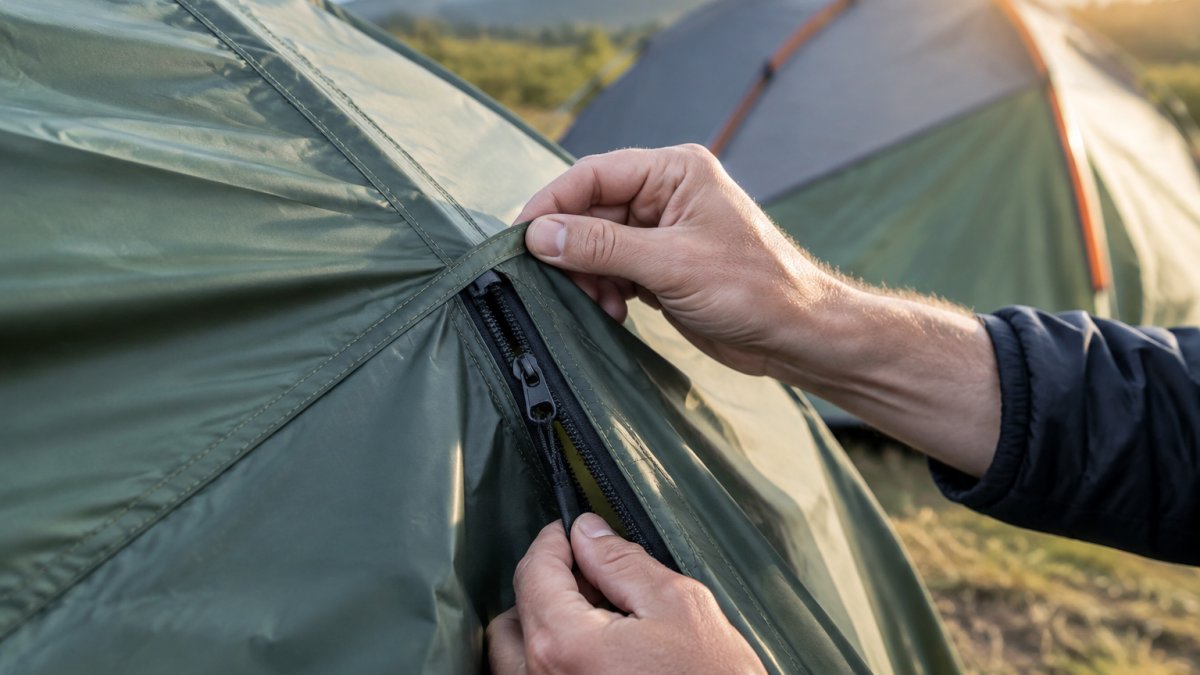
| Zippers | Basic coil zippers | Heavy-duty zippers with storm flaps |
| Lifespan | A season or two of light use | Many seasons with basic care |
| Repairability | Often not worth fixing | Patch kits and replacement parts exist |
A cheap tent can get you through a calm summer weekend.
What most guides miss is that the price gap isn't really about comfort. It's about how the tent behaves when the weather stops cooperating.
Materials and Construction That Drive the Price Up
A useful way to read a tent's price is as a receipt: every dollar maps to a material, a manufacturing step, a test, or a distribution cost.
Where the Money Actually Goes
A tent's retail price is built from several cost components, including materials, labor, testing, and distribution, and the proportions vary with tent type.
-
Fabric and coatings. Denier describes thread thickness, and higher-denier fabric costs more per yard because it uses more material and weaves more slowly. Coatings add cost in passes: a single light polyurethane coat is cheap, while a heavier coat on both sides, or silicone on both faces, adds real dollars per yard. Silicone-treated fabrics shed water well and stay strong, but cost more to produce and are harder to seam-seal in the factory.
-
Poles and hardware. Aluminum alloy poles bend and spring back; fiberglass poles are cheaper but crack and splinter. The price difference per pole set is one of the clearest signals of build quality, and it compounds with more poles, more guy-out points, and stronger webbing at each attachment.
-
Labor. Dense stitching, reinforced stress points, and fully taped seams all take time. More stitch lines per inch and hand-finished seam sealing cost more to assemble, and that labor shows up directly in the wholesale price.
-
Distribution and retail margin. Freight, warehousing, dealer margin, and returns processing are part of every retail price. A bulky rooftop tent carries more freight and storage cost than a compact ground tent, which is one reason the same quality level costs more in a larger package.
Fabrics, Coatings, and Waterproofing
Tent fabric is measured in denier, which describes thread thickness. Higher-denier fabric is heavier, stronger, and costs more per yard.
The coating matters just as much. Polyurethane coatings keep rain out, and a quality tent applies a heavier coat, often on both sides.
Specifications alone don't guarantee performance. A high hydrostatic-head rating on thin fabric can still fail at an untaped seam, and heavier denier doesn't help if the pole structure collapses in wind.
Poles, Stakes, and Structural Design
Poles are the skeleton of a tent, and they take the load in wind. Stakes and guy-out points follow the same logic: a wind-ready tent has more attachment points, stronger webbing, and stakes that hold in loose ground.
On rooftop tents, this is even more obvious. The hard shell has to handle wind load while parked and highway vibration while driving, so the frame, shell material, and mounting hardware all need a higher standard.
How Much Does a Good-Quality Tent Cost?
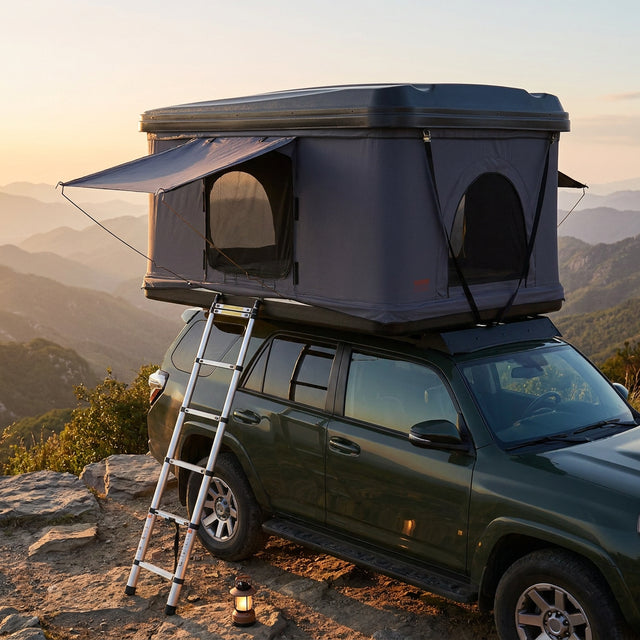
There's no single price for a good tent, because "good" depends on how you camp. Our hard shell rooftop tent models run from $1,549.99 to $1,689.99, and the $1,689.99 model includes a built-in mattress, integrated ladder, and mounting hardware.
The $1,689.99 model features a stainless steel frame, an ABS hard shell, and polyester fabric with a PU coating for rain and wind protection, plus a pop-up setup that takes under five minutes.
If you are weighing a purchase and want to ask about pricing, fit, or which model suits your vehicle, our team can help. You can contact us with your year, make, model, and roof rack type, and we will confirm fit before you order.
Are Expensive Tents Worth It? Weighing Cost Against Performance
An expensive tent is worth it when you camp often, camp in real weather, or need the tent to last.
The math is straightforward once you spread cost across uses. A tent that lasts many seasons costs less per night than a cheap tent you replace every year or two.
Here is the honest trade-off list for investing in a high quality tent:
Pros:
- Stays dry in sustained rain thanks to sealed seams and heavier coatings
- Holds up in wind because of stronger poles and more guy-out points
- Lasts many seasons, lowering cost per night
Cons:
- Higher upfront cost
- Heavier fabric and hardware add weight
- Overkill if you only camp in mild weather a few nights a year
Before spending more, check the return terms. Ours is a 30-day return policy, and you can read the details in our guide to what you can send back.
The Average Lifespan of a Tent and What Shortens It
A well-built tent used with care lasts many seasons. A cheap tent often lasts a season or two before seams fail, zippers jam, or poles break.
Several habits shorten a tent's life faster than anything else:
- Packing a tent wet and leaving it stored that way, which grows mildew
- Storing it compressed for months instead of loose and dry
- UV exposure from leaving it pitched in direct sun for weeks
A common mistake is blaming the tent for failures that come from storage. Dry it fully before packing, store it loose, and clean the zippers, and even a mid-range tent will last noticeably longer.
Choosing a Tent Based on How You Actually Camp
The right tent matches your real trips, not the trips you imagine. A useful approach is a short decision framework: score your actual use on five variables, then let the score tell you where to spend.
The Five Variables That Decide Where to Spend
- Trip frequency. Count nights per year, not trips. Under 10 nights a year, a mid-range tent with sealed seams and aluminum poles is usually the sensible buy. Over 25 nights a year, the cost per night of a premium tent drops below a cheap tent you replace every season or two.
- Terrain and exposure. Sheltered forest sites tolerate a lighter structure. Exposed ridge lines, desert wind, and beach camping demand more guy-out points, stronger poles, and a fly that sheds wind rather than catching it.
- Season. Three-season camping in mild weather needs waterproofing and bug protection. Snow load, sustained subfreezing temperatures, and driving rain push you toward heavier fabric, a stronger pole structure, and a tent rated for those conditions.
A Simple Scoring Method
Give each variable a score from 1 to 3 based on how demanding your use is, then add them up. A low total points to a mid-range tent; a high total justifies premium materials and construction. The point isn't a precise number but a disciplined way to stop paying for capability you'll never use.
- Low total (5-8): occasional fair-weather camper. Buy a mid-range tent with taped seams and aluminum poles, and put the savings toward trips.
- Middle total (9-12): regular three-season camper. Pay for sealed seams, a proven pole structure, and a real warranty.
- High total (13-15): frequent, exposed, or cold-weather camper. Premium fabric, tested poles, and repairability are worth the upfront cost.
When a Cheaper Tent Is the Better Choice
Most comparisons emphasize premium advantages. For occasional campers, fair-weather trips, and car camping, a cheaper tent is often the smarter buy.
If you drive to your campsite, weight matters less than durability and setup speed. Roof load limits and rack style decide which tents fit, so check our comparison of tents for small cars before you commit.
Watch out: matching a tent to the trips you plan rather than the trips you take is the most common buying mistake. Track your last 12 months of camping nights and conditions before you compare prices.
Explore Rooftop Tents Built for the Long Haul
The price of a high quality tent makes sense once you see where the money goes: stronger fabric, sealed seams, tested poles, and hardware built for years of use.
You can browse the full range and shop rooftop tents built for real trips, including models that fit SUVs and campervans. If you already know you want a hard shell that sleeps two to three people, take a look at our pop-up hard shell rooftop tent with a built-in mattress, integrated ladder, and mounting hardware included.
Both options ship free within the continental U.S. on most orders, and both come with a 30-day return window.
The gap between a cheap tent and a durable one shows up on the worst night of the trip, not the best.
Frequently Asked Questions
Why are tents so expensive now?
Prices climbed as fabrics like Dyneema and silicone-coated nylon became standard on premium models, and as brands added sealed seams, aluminum poles, and full-coverage rainflies. Labor costs for cutting and stitching also rose. A basic camping tent still starts well under $200, but a true four-season or ultralight backpacking tent with these materials often runs $400 to $800 or more. You are paying for lighter weight, better weather resistance, and a longer service life, not just a brand label.
Are expensive backpacking tents more durable?
Usually, yes, but durability comes from specific choices rather than price alone. Higher-denier fabrics, double-stitched seams, taped waterproofing, and aluminum poles all resist wear better than the thin polyester and fiberglass poles on cheap tents. That said, a bargain tent stored dry and pitched carefully can last years. The durability gap shows up fastest in wind, sustained rain, and repeated setup, which is exactly where cheap vs. expensive tents diverge most.
What's the average lifespan of a tent?
A well-made tent used a few weekends a year typically lasts 8 to 12 years with proper care, while a budget tent under the same use may need replacing in 3 to 5. Heavy use, UV exposure, and packing a tent away wet shorten any lifespan. Washing off dirt, drying thoroughly before storage, and repairing small seam or zipper issues early can push a good tent well past a decade.
How much does a good-quality tent cost?
Expect roughly $250 to $500 for a solid three-season camping tent and $400 to $800 for an ultralight backpacking model. Four-season expedition tents and hard-shell rooftop tents run higher, often $1,500 and up, because of stronger frames and hard shells. The price reflects fabric, poles, waterproofing, and warranty. Compare specs against your actual use before spending, since a $300 tent that fits your trips beats a $700 one you never need.